A survey can look clean on a screen and still fail under engineering review. That gap is where geospatial data qa qc matters most. For mining, utilities, water resources, and infrastructure programs, the real test is not whether a dataset was delivered quickly. It is whether every surface model, anomaly map, orthomosaic, and interpreted output can be traced back to controlled acquisition, calibrated processing, and documented validation.
In high-value projects, bad data is rarely obvious at first pass. A vertical bias of a few centimeters can distort cut-and-fill calculations. Poor boresight alignment can compromise corridor mapping. A misclassified point cloud can hide drainage risk or utility conflict. If those errors move downstream into planning, procurement, or construction, the cost multiplies. QA and QC are the controls that stop that chain early.
What geospatial data QA QC actually covers
The term gets used loosely, but QA and QC are not interchangeable. Quality assurance is the system of controls designed before and during acquisition. It covers survey planning, sensor calibration, flight line design, ground control strategy, SOPs, operator competency, metadata discipline, and processing workflows. Quality control is the verification layer applied to outputs. It tests whether the data meets defined tolerances, coverage requirements, classification standards, and client specifications.
That distinction matters because many failures cannot be corrected in processing. If line spacing is wrong for the target depth investigation, if overlap is insufficient for photogrammetric tie points, or if GCP distribution is weak at the site perimeter, QC may identify the problem, but the field team still has to remobilize. For remote or restricted-access assets, that is not a minor inconvenience. It is a schedule risk.
A disciplined geospatial program treats QA as a design function and QC as an acceptance function. Together they create data that is defensible in technical review, repeatable across campaign phases, and auditable months later when project assumptions are challenged.
Why geospatial data QA QC is a commercial issue, not just a technical one
Procurement teams often ask for accuracy thresholds, deliverable formats, and mobilization timing. Those are valid requirements, but they are incomplete without QA/QC method definition. A fast deployment has limited value if the resulting dataset cannot support reserve modeling, route optimization, utility planning, groundwater targeting, or asset inspection decisions.
For enterprise buyers, the risk sits in three areas. First, poor QA/QC weakens decision confidence. Second, it introduces contractual ambiguity because data acceptance becomes subjective. Third, it reduces comparability between survey phases, which is critical in mine expansion, infrastructure staging, environmental monitoring, and utility corridor change detection.
This is why mature geospatial contractors specify tolerances, validation methods, calibration intervals, control hierarchies, and acceptance criteria before mobilization. They are not adding paperwork. They are reducing the probability of expensive argument later.
The control points that matter in mission-critical surveys
The right QA/QC framework depends on sensing modality and project objective. A LiDAR terrain model for flood analysis does not have the same control priorities as an aeromagnetic survey for structural interpretation. Still, the strongest programs share a common control architecture.
Sensor calibration and platform validation
Every survey starts with instrument confidence. GNSS/IMU alignment, camera calibration, LiDAR boresight parameters, magnetometer compensation, and radiometric baseline checks all need current validation status. For drone operations, platform behavior also matters. Vibration, payload mounting stability, thermal performance, and navigation reliability can all affect data quality.
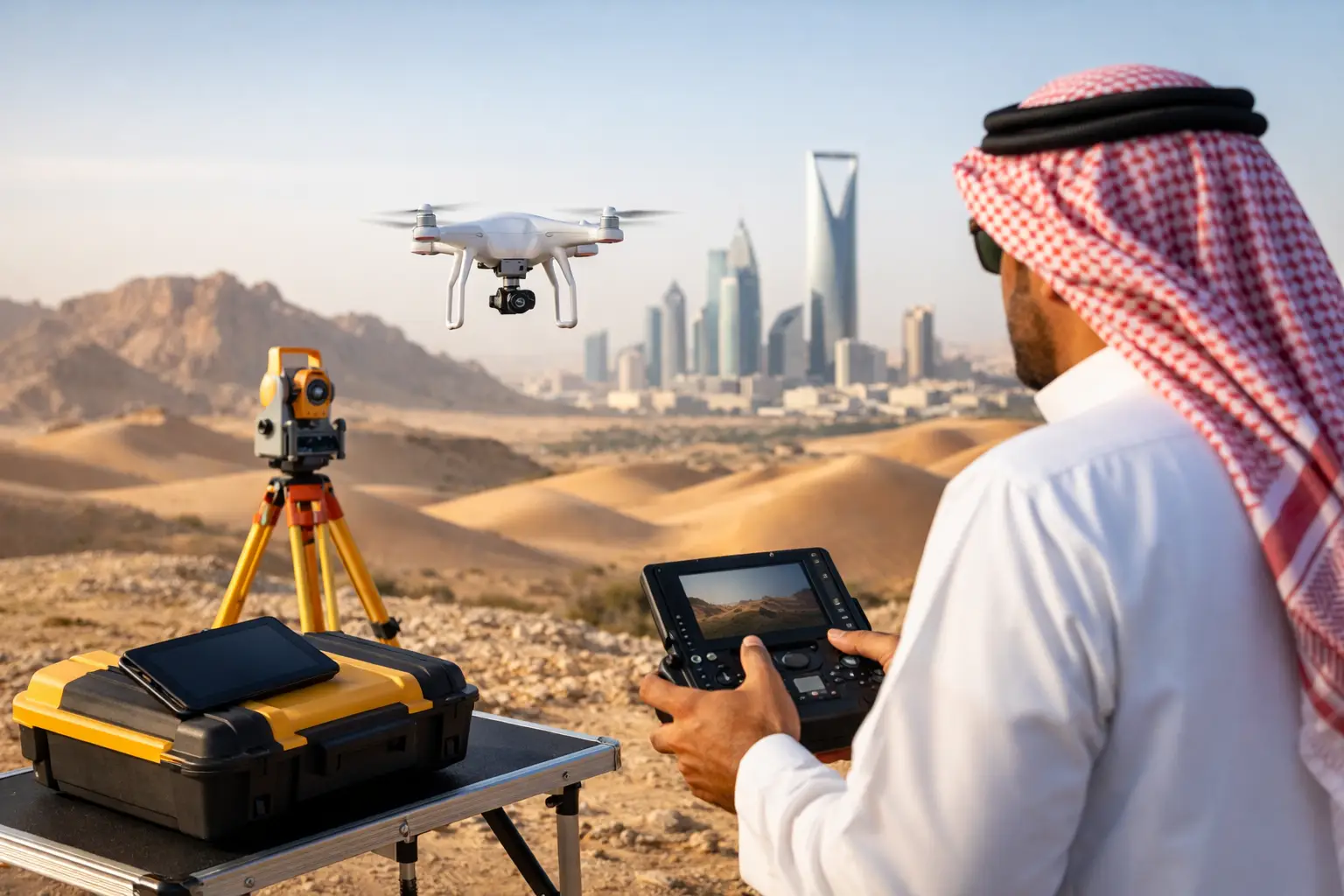
In desert operations, environmental stress raises the bar. Heat load can influence battery behavior and sensor drift. Dust can affect optics and cooling. Long transit distances and sparse logistics make field redundancy essential. QA must assume harsh conditions, not ideal ones.
Survey design against the decision objective
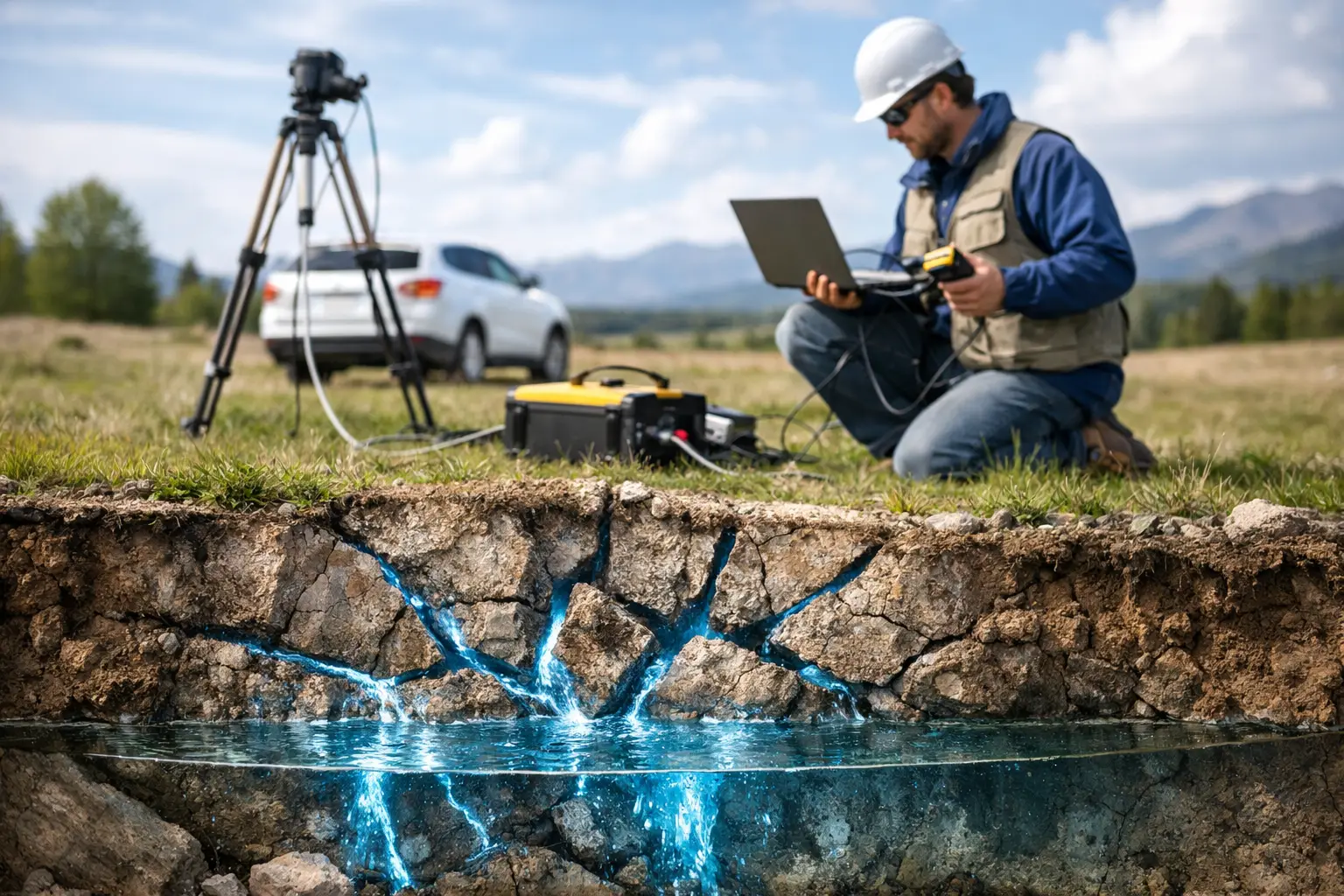
A technically correct flight can still be the wrong flight. Line spacing, terrain following, overlap, altitude, sampling density, speed, and acquisition timing must match the end use of the data. If the objective is utility conflict detection, point density and positional accuracy carry different weight than they do in regional exploration mapping. If the objective is groundwater exploration using multi-sensor signatures, cross-sensor alignment becomes a first-order control, not a secondary one.
This is where experienced survey design outperforms generic drone deployment. The question is not simply whether the platform can collect data. It is whether the acquisition geometry supports the interpretation that decision-makers need.
Ground control, check points, and independent verification
Control strategy should never be an afterthought. Well-distributed GCPs improve absolute accuracy, but independent check points are what prove it. Without separated validation points, teams can end up confirming a model against the same control used to force-fit it. That may satisfy a casual review, but it does not satisfy an engineering one.
The same principle applies beyond photogrammetry. Independent references, repeat lines, crossover analysis, benchmark comparisons, and surface spot checks provide the evidence base for acceptance. Cross-validation is stronger than self-confirmation.
Where failures usually happen
Most geospatial errors are not caused by a single catastrophic mistake. They come from small control failures that stack. A rushed preflight check, inconsistent base station logging, weak metadata capture, or unreviewed classification edit can all pass unnoticed until the final product is used for something expensive.
One common failure is treating processing software outputs as proof of quality. Automated reports are useful, but they only measure what the software is configured to test. They do not understand project intent. A point cloud can meet generic completeness thresholds while still being unsuitable for slope stability assessment or utility offset measurement.
Another failure is poor version control. If processing parameters change between iterations and the chain of custody is weak, teams can struggle to explain why one deliverable differs from another. In regulated or high-capex environments, that is a problem. Decision-grade data needs a traceable lineage from raw acquisition to interpreted product.
A practical geospatial data QA QC workflow
For most industrial programs, an effective workflow is staged rather than linear. First comes pre-mobilization QA. This includes scope translation into measurable tolerances, method statements, sensor readiness checks, control plans, risk review, and deliverable definitions. The goal is to remove ambiguity before the first flight or traverse.
Second comes in-field QC. Teams should verify coverage, line adherence, overlap, telemetry health, control integrity, and sample outputs while still on site. Waiting until full post-processing to discover a gap is avoidable in many cases. Rapid field validation is one of the strongest protections against remobilization.
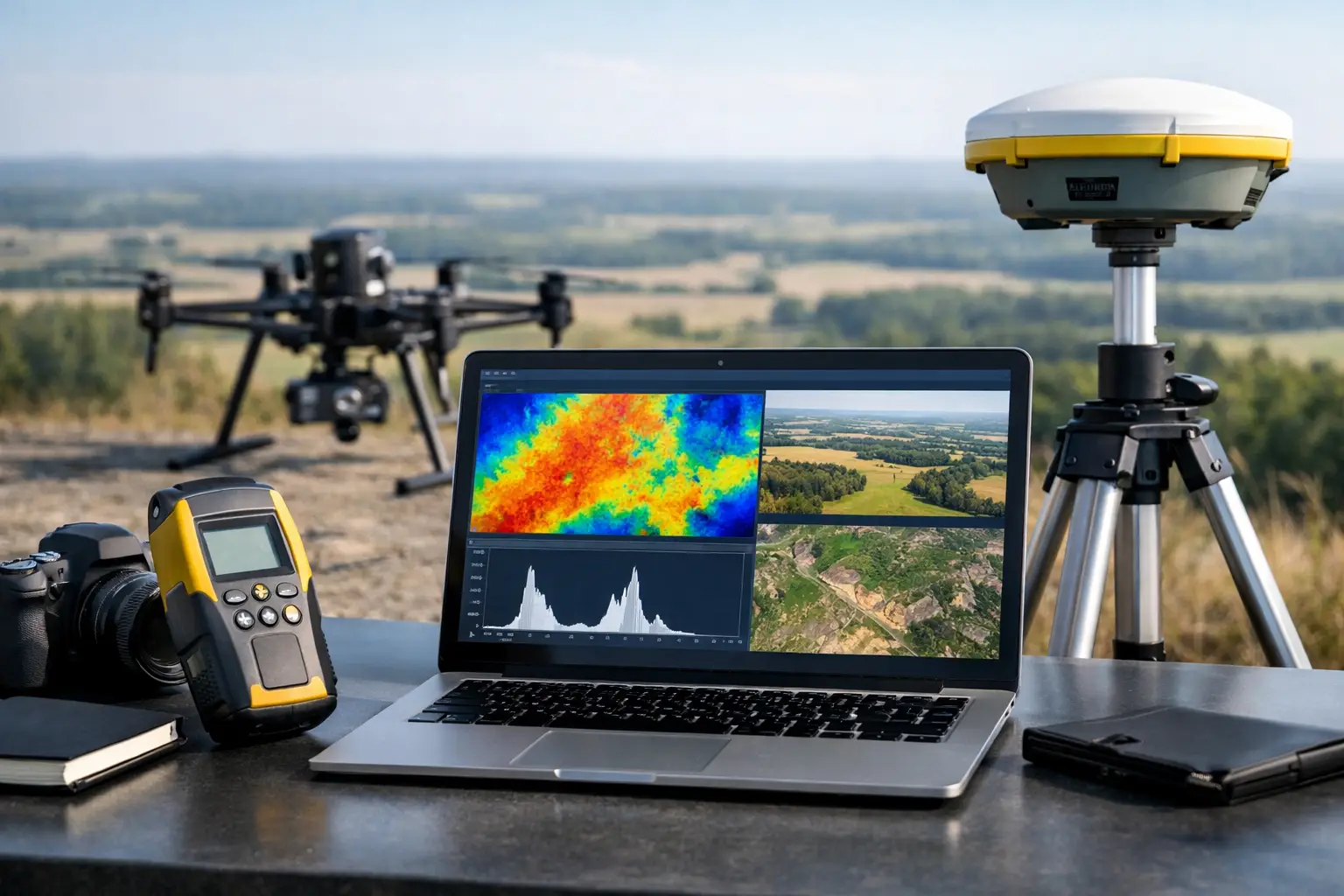
Third comes processing QA. Coordinate systems, geoid models, calibration files, filtering thresholds, classification rules, and fusion parameters must be controlled and documented. In multi-sensor work, alignment checks between datasets are essential. A beautifully processed orthomosaic and a separately accurate LiDAR surface still create problems if they are not correctly registered to each other.
Fourth comes final QC and acceptance testing. This is where residuals, RMSE, completeness, anomaly consistency, crossover statistics, density maps, classification review, and specification compliance are tested against the agreed criteria. The strongest teams also issue a concise QA/QC record with methods, tolerances, exceptions, and corrective actions clearly stated.
Why interpreted outputs need QA/QC too
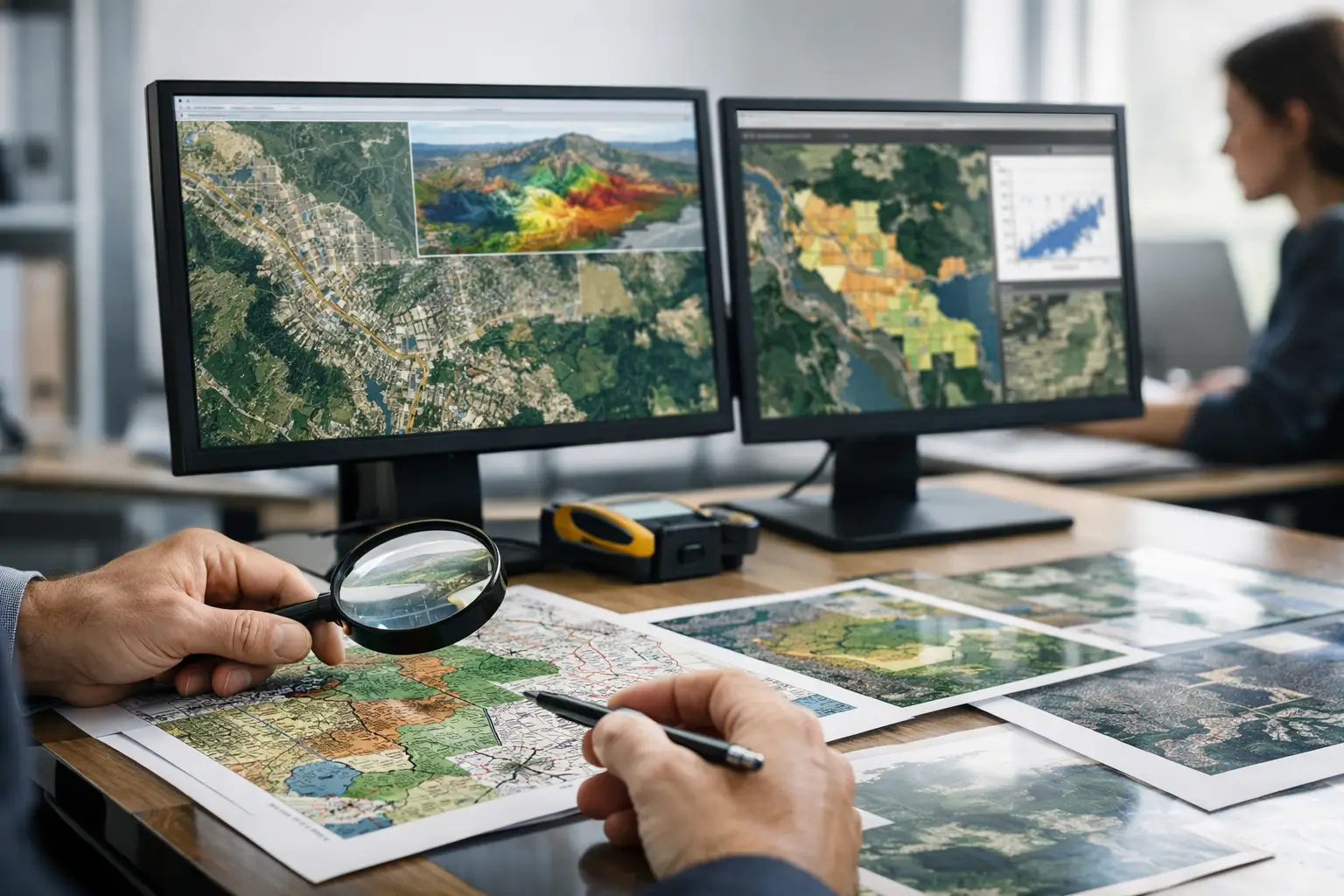
Many clients do not buy raw data. They buy decisions supported by interpreted geospatial intelligence. That means QA/QC cannot stop at point clouds, rasters, or sensor grids. It has to extend into anomaly picking, lithologic interpretation, hydrogeologic targeting, corridor feature extraction, and engineering-ready mapping.
Interpretation introduces expert judgment, and expert judgment needs controls. Cross-review by senior specialists, comparison against legacy datasets, confidence ranking, and explicit treatment of uncertainty all improve reliability. It depends on project type, of course. Early-stage exploration can tolerate more interpretive uncertainty than detailed design for a transmission corridor or industrial expansion site. The key is to state that uncertainty clearly rather than bury it.
This is where specialized providers create separation. Firms such as Air Solutions that combine calibrated acquisition, documented processing, and sector-specific interpretation are better positioned to deliver outputs that survive technical scrutiny, not just initial client presentation.
What buyers should ask before awarding a survey
The most useful question is not, "What accuracy can you achieve?" It is, "How will you prove compliance, and what happens if the data fails acceptance?" That shifts the conversation from claims to controls.
Buyers should expect a clear QA/QC methodology, defined tolerances, independent validation logic, metadata standards, and traceable revision control. They should also ask how the provider manages environmental constraints, sensor redundancy, and field-stage quality checks. In harsh operating theaters, execution maturity matters as much as sensor specification.
A credible provider will answer with process discipline, not sales language. They will explain what is measured, how it is tested, what standards are applied, and where trade-offs exist. Because there are always trade-offs. Higher density can require slower collection. Faster turnaround may narrow the window for manual review. Broader area coverage may change control distribution strategy. Good QA/QC does not eliminate these tensions. It makes them visible and manageable.
The most valuable geospatial dataset is not the one with the most layers. It is the one your technical team can trust when the decision gets expensive.